


FULLY MANAGED
FOR FINACIAL SERVICES
Third-party oversight is a leadership responsibility but few organisations have a dedicated internal TPRM function.
The Third-Party Risk Center operates as your outsourced third-party risk team.
We manage assessments, due diligence, monitoring, incident oversight, and business continuity reviews, powered by our platform and delivered as a structured, ongoing service.
You retain oversight.
We manage the work.

HOW THE RISK CENTER WORKS
The Third-Party Risk Center operates as your dedicated third-party risk function, structured, consistent, and fully managed.
ESTABLISH & STRUCTURE
Streamline supplier onboarding with automated approval workflows.
Quickly identify critical suppliers, run risk assessments with ready-to-use templates, and demonstrate due diligence from the very start.
ASSESS & DOCUMENT
We conduct structured risk assessments and due diligence reviews, collect and track documentation, and record oversight activity within our platform.
MONITOR & MAINTAIN
We maintain review cycles, track remediation actions, monitor incidents, and oversee business continuity exposure for critical providers.
REPORT & SUPPORT
We provide structured reporting and leadership visibility, ensuring oversight remains clear, documented, and demonstrable.


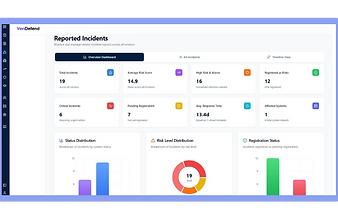

All activity is powered by our proprietary platform. Ensuring transparency, auditability, and scalability.
You retain oversight.
We manage the work.
BUILD. BUY.
OUTSOURCE.
Financial institutions typically take one of three approaches to third-party risk management.
Each model carries different implications for cost, complexity, internal resource demand, and sustainability.
Below is a clear comparison of these three approaches.
Model
Who Runs the Function
Internal
Resource Demand
Implementation Complexity
Long-Term Sustainability
Build
Internal hires
High
Medium
Dependent on staffing
Buy
Internal team + platform
High
High
Platform-dependent
Outsource
Vendor Risk Hub
Low
Low
Structured & supported
Understanding the structural differences between these approaches is critical, because third-party risk is no longer a one-time assessment exercise.
It is an ongoing operational capability.